Margin Studies
S3-CP-L-2026
Margins in architecture refer to the spatial edges or intermediate zones that exist between built form and surrounding context. Rather than acting merely as boundaries, these margins organize transitions between spaces and structure the relationship between interior and exterior environments. Through their placement and composition, margins often dictate physical access, guiding entry, movement and spatial hierarchy. While they vary greatly in form, scale and program, they share a common condition: the margin is not treated as a residual or leftover space but as an active spatial device.
The buildings selected for this study, margins appear in the form of courtyards, arcades, plazas, forecourts or circulation corridors—spaces that mediate between built form and open environment, interior and exterior, or collective and individual realms.
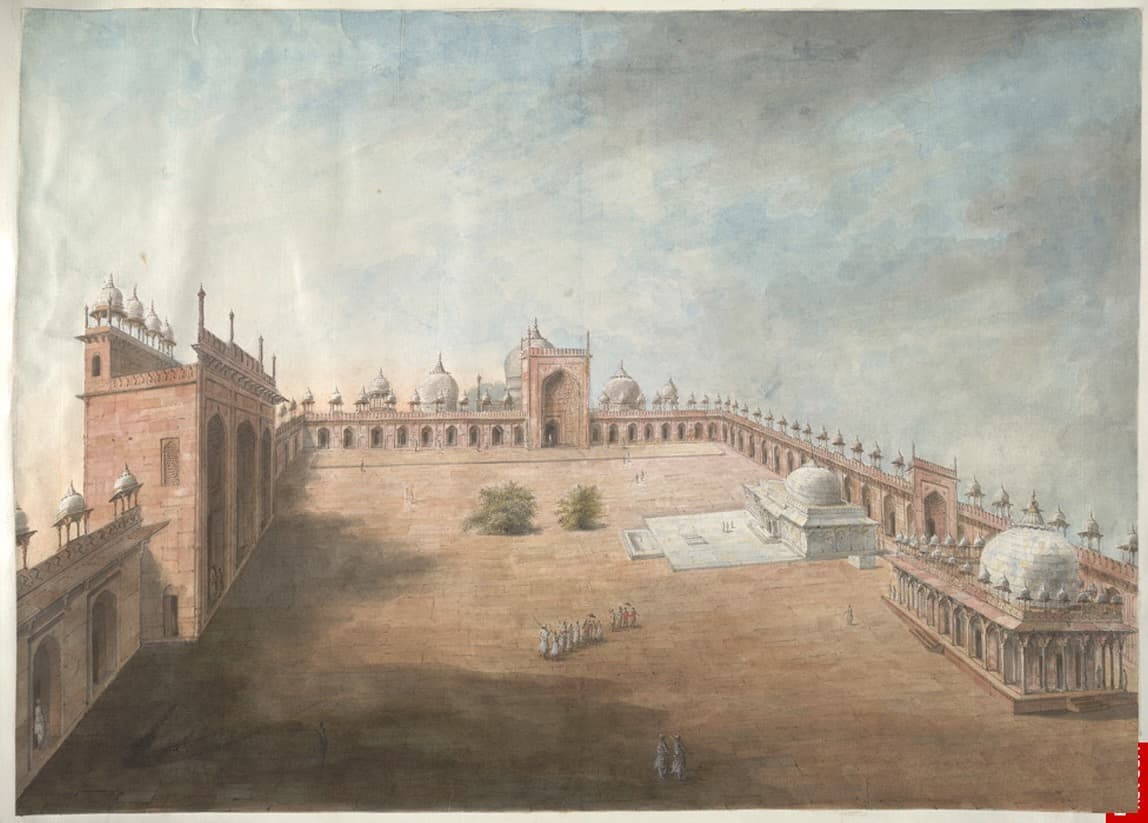
The primary criterion for selecting these works was the clarity with which margins shape the compositional order of space. In several historical religious complexes, the courtyard acts as a spatial margin that organizes the relationship between architecture, congregation and landscape. In modern urban contexts, large public plazas operate as civic margins that structure the interface between built blocks and collective movement. Similarly, courtyard-based domestic typologies demonstrate how margins can structure everyday life, mediating between interior living spaces and the surrounding environment.
Methodologically, the research involves a process of reading and decoding. It then represents the spatial analysis through red blue drawings. Examining to identify relationships between center and edge, therefore interior and exterior. These drawings reveal the intent behind the composition and its effects on the space enclosed.
While margins play a critical role in shaping the politics of access and exclusion within the built environment, this study deliberately sets aside their political implications in order to focus on their compositional and spatial intent. The political dimension of margins is significant enough to be chapterized separately as a series in the study.
Part One of this study focuses on Indo Islamic architecture. Architectural elements such as courtyards, gateways, arcades and forecourts create layered thresholds that mediate between the exterior and interior.