Kangra Studies
S2-CX-L-2022
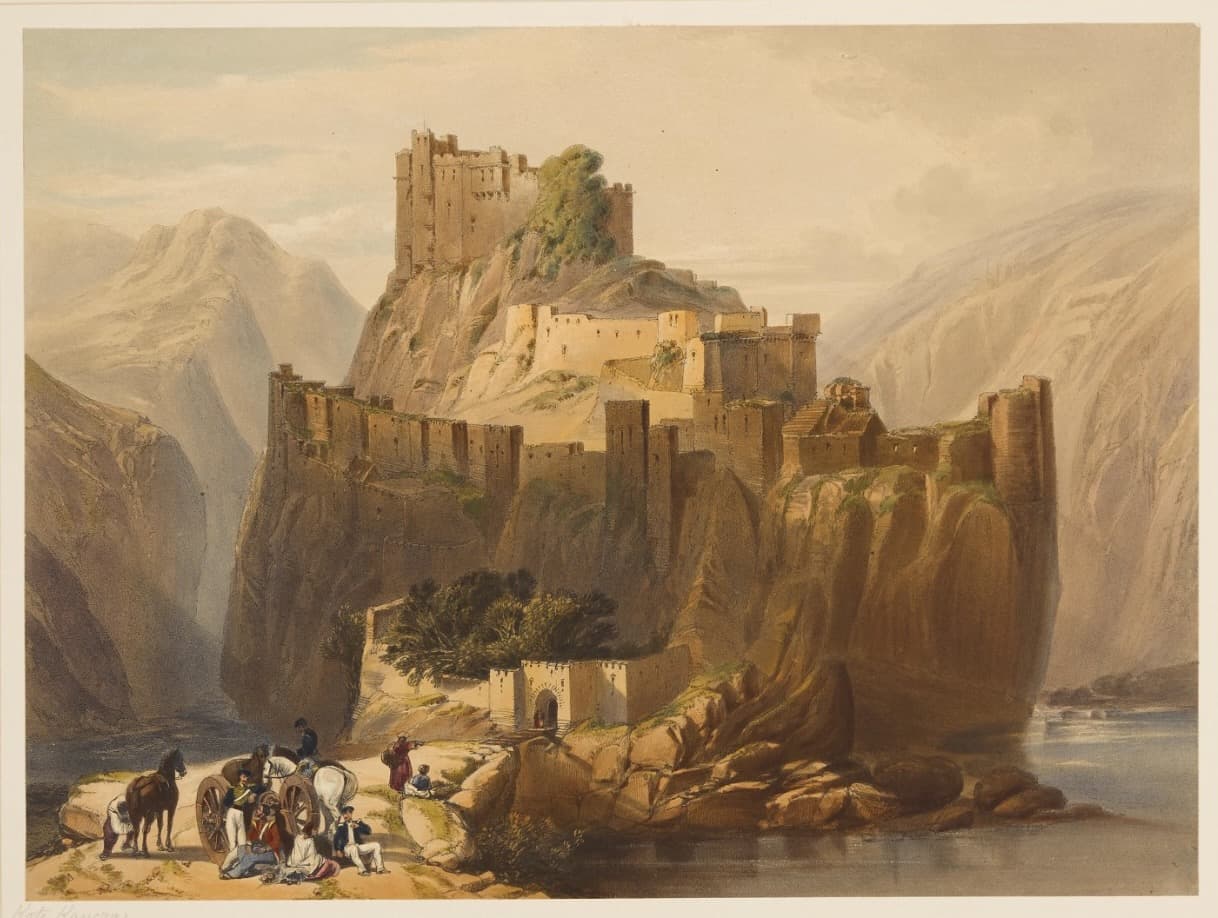
Meaning is generally Kangra Studies begins with the Kangra Fort, once impregnable and now in ruin. Drawn at 1:50, each stone is delineated to foreground construction and surface over outline. While the drawings record the fort in its present state, accompanying texts trace its journey as it changed hands and power.
The study attempts to draw a visual atlas of the physical artefacts of varying scales, from the crafted personal to the constructed urban. The idea is to create a repository in the drawing form of all such articles which have informed its character. This way, the reading of a place can be extracted through the visual archive as much as the recorded fact. These drawings can then be used to inform patterns and tendencies for the context.
Kangra Fort, or Nagarkot, the first part of the study, is approached not as a finished building, but as an artefact in flux. It is read through its fragments, surfaces, thresholds, and absences. Each element conveys a sense of time to the contextual study, revealed through construction. The palimpsest that emerges is read as a character of the built artefact, marking an important distinction between craft and construction.
Today, as the question of modern conservation looms, the fort stands for an idea of the architectural project as the act of building; one in which additions appear as dialog in material form. Therefore the attempt is to record the physical presence of the artefact in drawings that reveal these constructional relationships.